Metal comparison
Think about your lifestyle before color
Weighing budget, durability, maintenance and skin sensitivity together makes the choice easier.
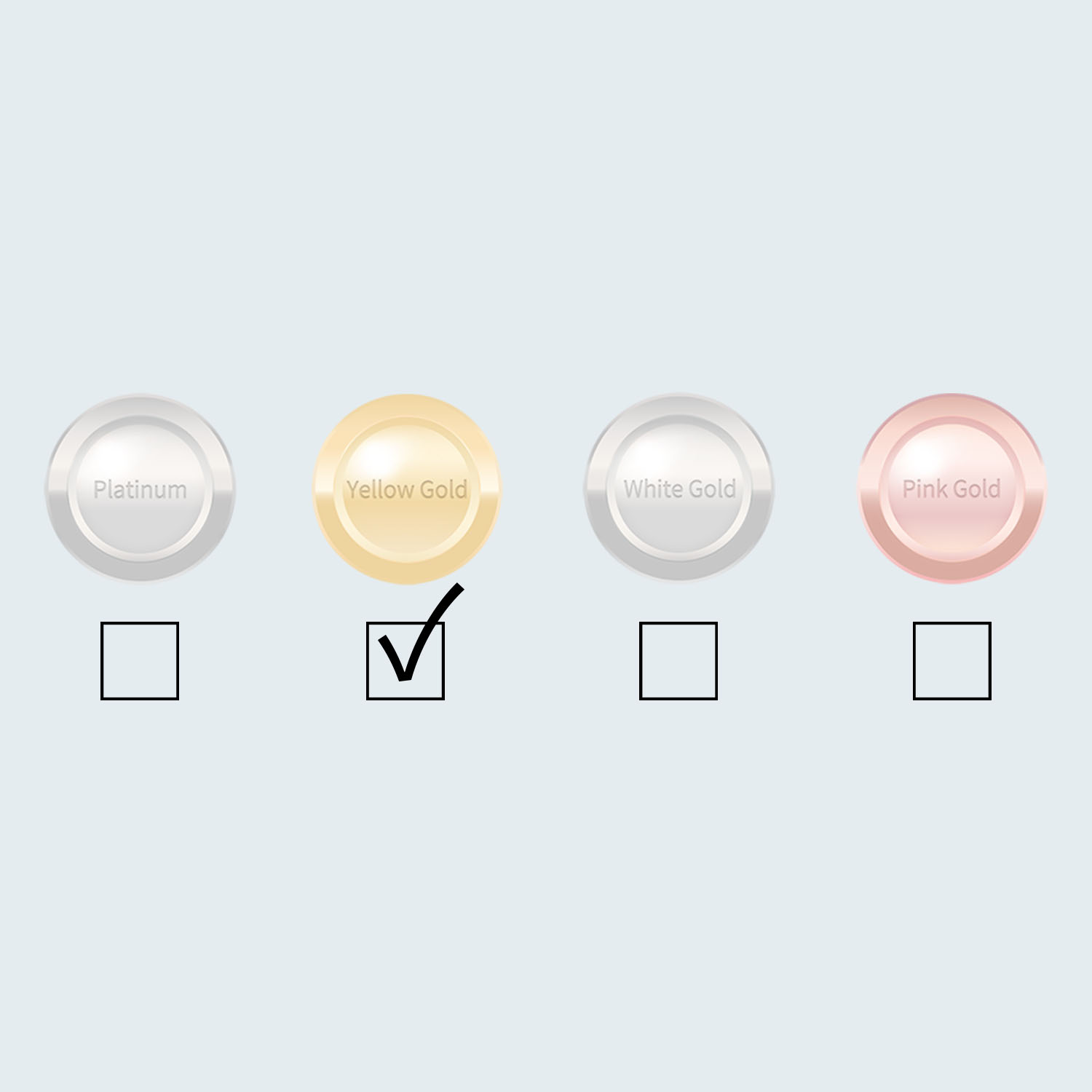
Naturally white
Platinum
Its natural white never fades and it is highly hypoallergenic, making it ideal for wearing every day for years.
- Budget
- High
- Care
- Easy
- Recommended purity
- PT950
Warm and classic
Yellow gold
A warm, vivid gold with classic appeal, and its color needs no plating.
- Budget
- Medium
- Care
- Easy
- Options
- 14K · 18K
Soft rosy warmth
Rose gold
A warm rosy hue that blends softly with skin and pairs easily with other rose gold jewelry.
- Budget
- Medium
- Care
- Easy
- Options
- 14K · 18K
Bright and versatile
White gold
A bright white and great versatility, though it needs periodic replating to keep its shine.
- Budget
- Medium
- Care
- Needs replating
- Options
- 14K · 18K
Platinum: a natural white that never changes
Platinum has a natural white luster without any plating, and its color does not change over time. Dense and tough, it is comfortable for everyday wear, and at high purity it is relatively safe for people with metal allergies.
Alloying and crafting platinum is demanding and takes real skill, so making and repairing it tends to cost more. It may be less liquid than gold, but it is a wonderful choice if you want a wedding ring that stays the same for a lifetime. Connerstone uses PT950, which is 95% pure.
White gold: bright and endlessly versatile
Alloying yellow gold with white metals produces white gold with a slight champagne tone. To achieve a bright white like platinum, it is usually finished with rhodium plating.
The plating wears gradually, so periodic replating and cleaning are needed. Plating that is too thin can wear off quickly, which is why an even alloy, careful finishing and ongoing aftercare matter.
Yellow gold: warm, classic gold
Pure gold has a deep color but is soft, so it may not suit an everyday ring that needs to hold a diamond securely. Alloyed with other metals, 14K and 18K gold are stronger and shinier, easy to care for, and keep their warm color for years.
Unlike white gold it needs no plating, but the alloy ratio must be precise to keep the color and gold content consistent and reduce the chance of allergies.
Rose gold: a rosy glow that melts into your skin
Rose gold gets its warm, rosy hue from its alloy. If you already wear rose gold jewelry, a rose gold wedding band will blend right in for a consistent look.
Keeping the color beautiful and the gold content accurate requires an even blend of gold and alloy metals. If your skin is sensitive, check the alloy components such as copper, and compare higher-gold options like 18K first.
18K vs. 14K: what is the difference?
About 58.5% gold
14K
A higher share of alloy makes it relatively hard and easy to wear every day, at a lower cost than 18K.
- High durability
- Light, everyday wear
- Budget-friendly
75% gold
18K
More gold means higher intrinsic value and a richer color, and it is generally kinder to sensitive skin.
- High gold content
- Rich color
- First choice for sensitive skin